In roughly a week, close to $1T of market cap was erased across software and services stocks. Investors are no longer asking whether AI will matter, but where value can persist when AI executes work rather than merely assisting it. Long-standing assumptions about labor, margins, and defensibility are being rewritten in real time, and business models built on selling human effort or incremental productivity are being repriced accordingly, presenting a structural change in how economic value is created and captured.

We see the same pattern in Cherry’s own portfolio. Despite strong fundamentals and solid growth, companies that read as “classic SaaS” find it increasingly hard to fundraise. Meanwhile, AI-native companies with less proven economics command attention because their story maps to where investors think value is moving.
The question for software founders is no longer “how do we add AI?” But, when agents do the work, what are we still charging for?
To put this into perspective, a lot of the discourse right now treats disruption as a moment rather than a journey. Steven Sinofsky has been pushing back on this “death of software” framing with a reminder drawn from prior transitions (PC, retail, streaming): the world doesn’t need less software after a platform shift; it usually needs vastly more, and the legacy layers often remain critical enablers. Markets, as always, overshoot and dramatize, but the underlying shift is real, and it forces sharper, more consequential questions for founders building in software and AI about where durable value actually accrues.
The Thesis: From Interface to Outcomes
A meaningful portion of SaaS has been priced on the assumption that humans must operate workflows inside the product: clicking, routing, reconciling, following up, updating records. If an agent can do that reliably, seat-based access to the workflow stops being the scarce asset.
Conviction's Sarah Guo captured the shift in one line: “When code is cheap, judgment becomes the work.”
The shift starts with AI assistants and ends with intent-to-outcome workflows.
At first, humans run the workflow and AI simply assists: parsing information faster, suggesting next steps, and reducing manual effort.
Next, AI begins to run the workflow itself. Agents take messy inputs, structure decisions, and execute tasks, while humans stay in the loop to review, approve, and correct.
Eventually, we reach intent-to-outcome systems. Humans define goals and constraints; agents execute end-to-end; humans step in only for exceptions and edge cases.
In software, this transition collapses the “middle” of work — routing, follow-ups, reconciliation, and updates. Value concentrates instead in what remains uniquely human: defining constraints, handling exceptions, and carrying accountability.

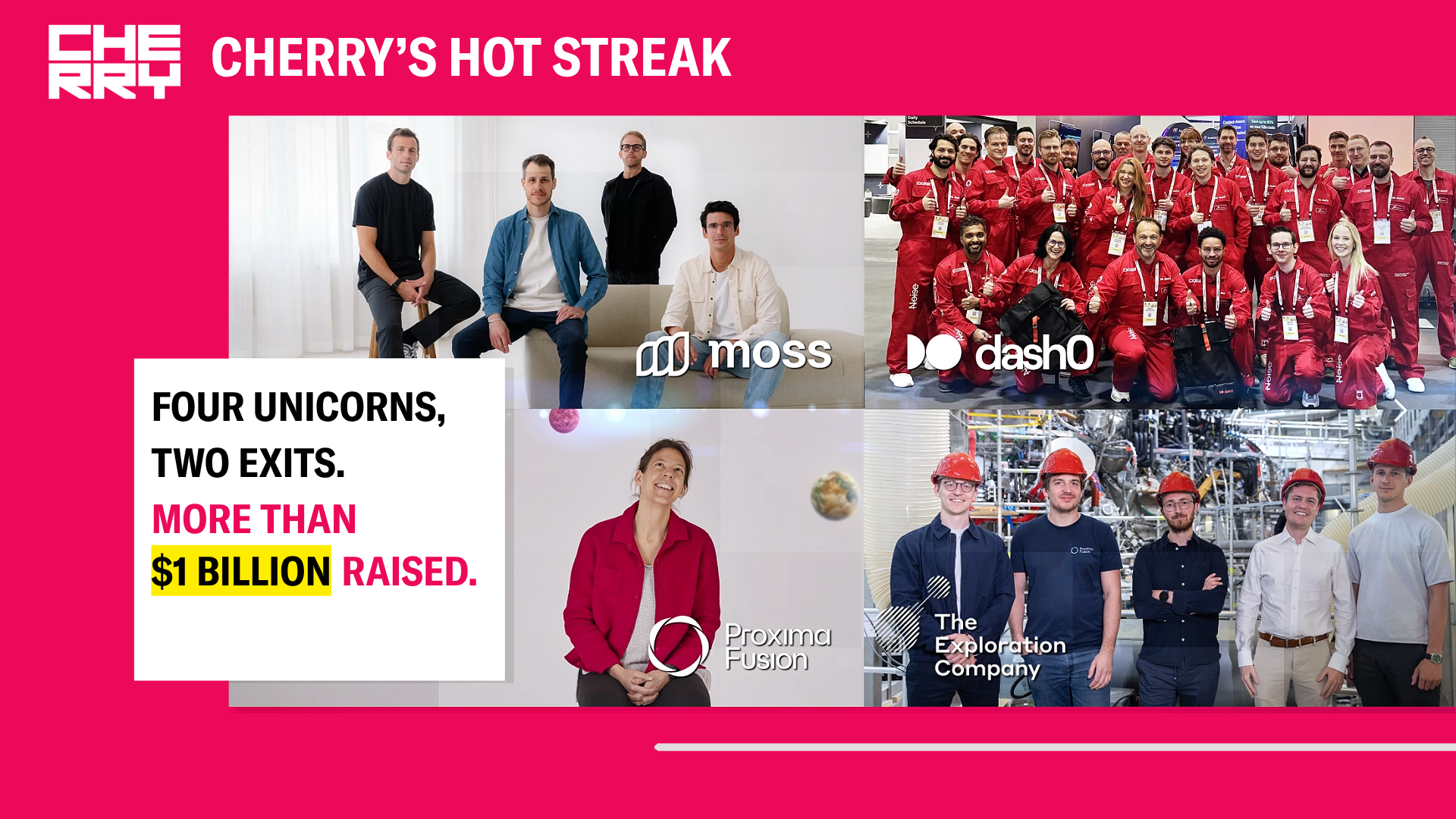
Cherry's portfolio offers many case studies of companies perfectly illustrating the shift in SaaS to outcome-based systems. In engineering, Synera runs autonomous agents that design, simulate, and validate products end-to-end. In observability, dash0 launched its key agent “Agent0” two months ago and now 90% of their customers are using it. In compliance, Cortea executes audits and produces traceable reports automatically, rather than managing checklists. Forgent is capturing value not by assisting public tender applications but by actually performing most of the critical steps without a human in the loop.
In sales operations, telli replaces reps with AI voice agents that run complete call workflows. With commerce becoming agentic, SWAP is redefining the shopping experience. And in Fintech, companies like Light and Moss have developed agents that execute approvals and transactions for the CFO office. Across domains, these companies moved from software that supports work to systems that deliver outcomes.
What survives when the user is an agent?
If an agent can operate your product via API, a lot of SaaS collapses to database + permissions + endpoints. That tends to be priced like infrastructure, not like an application.
So the survivable positions look like:
- Authority & Record: Systems that holds the canonical, legally or operationally accepted truth. In many markets this status is conferred by regulation, contracts, or long-standing institutional trust.
- Execution Power: Systems that are authorized to execute outcomes - move money, approve actions, enforce rules, or trigger real-world effects - rather than merely recommend or report.
- Permission & Regulation: Ownership of licenses, regulatory standing, or formal permissions that cannot be bypassed by automation. In regulated industries, this often defines the market boundary.
- Economic Control: Control over pricing, risk, capital allocation, or settlement. Value accrues to the layer that sets economic terms and absorbs financial exposure.
- Accountability & Embedded Data: The layer where liability, auditability, and traceability reside, and where proprietary data is generated through sustained participation in real operations.
Bottom line: as agents collapse interfaces and workflows, durable value concentrates in systems that are authorized, executable, economically decisive, and accountable.
What does this mean for founders?
Most advice right now is still early-game advice: “add an assistant,” “ship a copilot,” “make workflows faster.” It’s fair to say that this will not be a winning strategy.
The market is already oriented toward the "endgame": systems that execute, with humans present for constraints and edge cases.
Fundamentally, software founders need to provide an answer to the question:
In a world where an agent is the primary user, what remains of our product, and why do we still get paid?
If your answer is “we have a strong brand and people are used to our UI,” you’re exposed (and are mostly buying time).
If your answer is “we own the record / we execute the action / we generate proprietary data / we drive significant outcomes” you can ride through this shift, and compound on the other side.

.png)